What Is a Backlink and Why Does It Matter for SEO?
Backlinks have been part of the SEO conversation for years. But their role has changed as Google Search has become more sophisticated.
Gary Illyes from Google’s Search Team said at PubCon 2023 that links were no longer among the three most important ranking factors used by Google Search. The statement quickly made the rounds in the SEO community, including on X.
That doesn’t necessarily mean backlinks have become irrelevant.
Links still help search engines discover pages, understand relationships between websites, and evaluate the broader context around online content. The bigger question is no longer simply how many backlinks does a website have?
It’s what kind of backlinks are those?
That’s where things get more interesting.
What Is a Backlink?
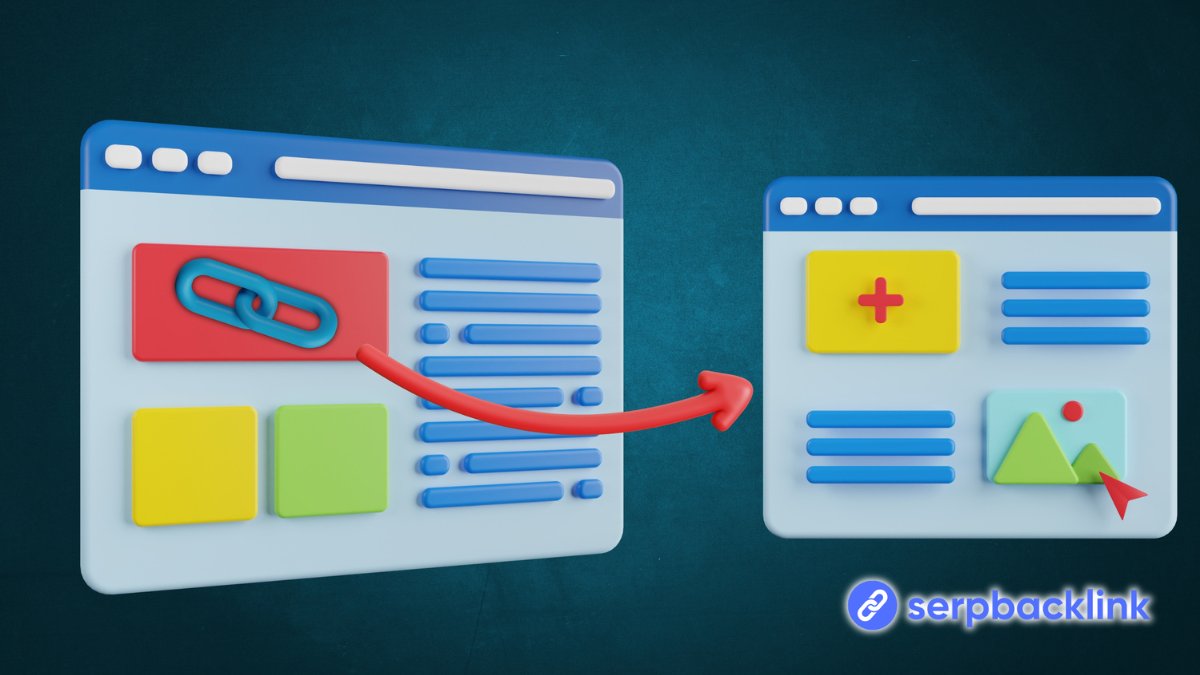
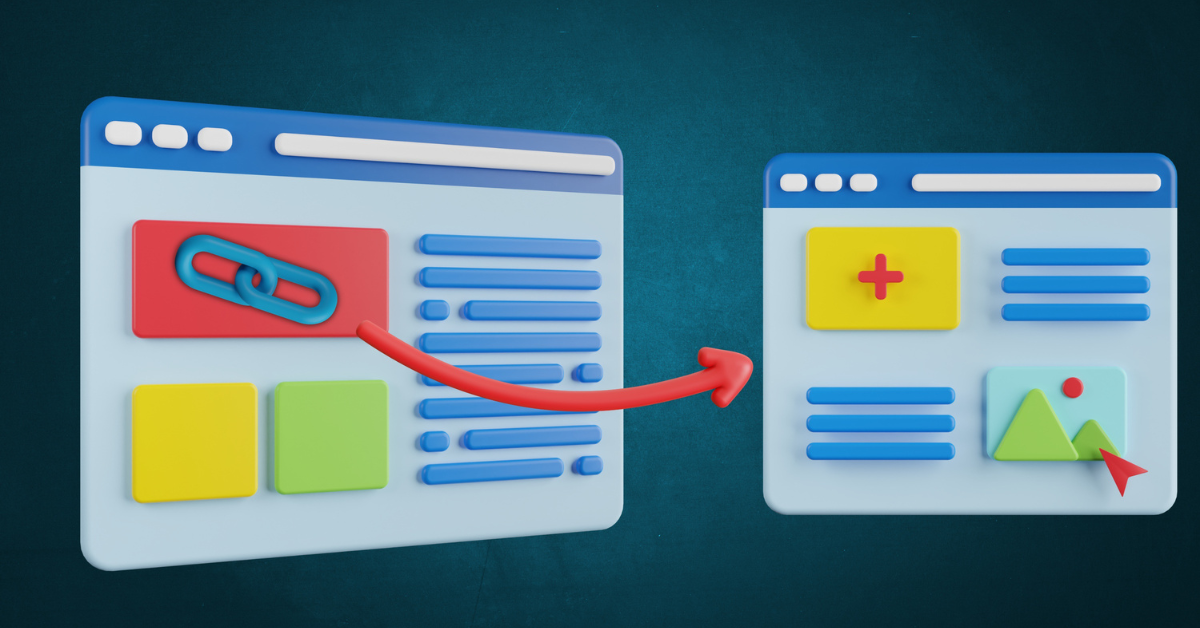
A backlink is a link from one website that points to another website. You’ll also see terms such as inbound link, incoming link, or external link used to describe the same basic concept.
For example, imagine Website A publishes an article and links to Website B. From Website B’s perspective, that link is a backlink.
From Website A’s perspective, however, it’s an outbound link.
So when SEO professionals say things like “this website received a backlink” or “we’re building backlinks to this page,” they’re talking about links coming from other websites.
For simplicity, we’ll just use the term backlink throughout this article.
Why Are Backlinks Important in SEO?
One of the fundamental reasons links matter is discovery.
Search engines crawl the web by following connections between pages. A link can help Google’s systems discover another page and understand how different pieces of content are connected.
There’s also a long-standing SEO concept that treats a backlink somewhat like a vote.
The idea is straightforward: when another website links to your content, it can signal that the linked page is useful or relevant enough to reference.
But there’s an important catch.
Not every vote carries the same weight.
A link from a highly relevant and trustworthy website can mean something very different from a random link placed on a low-quality website created primarily for SEO manipulation.
This is why modern link building isn’t simply a numbers game.
What Are the Benefits of Backlinks?
Backlinks can provide several benefits to a website, both directly and indirectly.
1. They Can Support Search Visibility
Links remain part of Google’s search systems. Google’s evaluation of links has evolved considerably over time, but links still provide signals that can help search engines understand pages and relationships between websites.
One of the concepts historically associated with this process is PageRank, Google’s system for evaluating the importance of pages based partly on links.
So, while it’s inaccurate to treat backlinks as a magic ranking button, they can still contribute to a website’s ability to compete in organic search.
2. They Can Help Search Engines Discover Content
A backlink can give search engine crawlers another path to find a page.
This becomes particularly useful when a website has new content, pages that aren’t easily accessible through internal navigation, or a large number of URLs that need to be discovered.
3. They Can Bring Referral Traffic
SEO isn’t the only reason to build links.
Someone reading an article may click a relevant link and visit your website. That visit is known as referral traffic.
In some cases, this traffic can be more valuable than the SEO benefit itself, especially when the link appears on a website whose audience closely matches your target market.
For website owners, this matters because a useful backlink should ideally do more than exist in an SEO report. It should make sense to an actual reader.
Not All Backlinks Are Equal
This is probably one of the most important things to understand about link building.
Two websites might each give you one backlink, but those links don’t necessarily have the same value.
Google has systems designed to evaluate links and the relationships between websites. PageRank is one part of that broader history.
Relevance, context, placement, the quality of the linking website, and the reason the link exists can all matter when evaluating a backlink.
That’s why chasing hundreds or thousands of random links isn’t necessarily a smart SEO strategy.
A smaller number of relevant links can make much more sense than a huge collection of unrelated ones.
Types of Backlinks
There are several ways to categorize backlinks.
Based on how they’re acquired, you might come across:
- Organic backlinks
- Relationship-based backlinks
- Guest blogging backlinks
- Press release backlinks
- Editorial backlinks
- Forum backlinks
- PBN backlinks
Backlinks can also be categorized according to where they appear on a webpage.
For example:
- Links inside the main content
- Image links
- Footer links
- Widget links
Does Link Placement Matter?
Yes, context and placement can matter.
Bill Slawski previously discussed how links positioned prominently within content can be more likely to receive clicks than links buried in places such as footers.
This makes intuitive sense. A link naturally placed inside an article, where it helps the reader understand a topic, is fundamentally different from a collection of unrelated links sitting at the bottom of a page.
So when evaluating a backlink, don’t just ask:
“Is there a link?”
Ask:
“Why is this link here?”
That simple question can reveal quite a lot about its value.
Backlinks and the rel Attribute
Google also provides guidance on how website owners can qualify outbound links using the HTML rel attribute.
This helps search engines understand the nature of a particular link.
Nofollow Links
A nofollow link uses:
<a rel="nofollow" href="https://example.com/">Example</a>The nofollow attribute tells search engines that the publisher doesn’t want the link to be treated as a normal endorsement or association with the target page.
John Mueller has stated that nofollow links don’t pass PageRank.
That doesn’t automatically make every nofollow backlink useless, though. A nofollow link can still generate referral traffic, exposure, and potentially lead to other organic mentions or links.
Sponsored Links
Sponsored links are intended for advertisements or other paid placements.
The markup looks like this:
<a rel="sponsored" href="https://example.com/">Example</a>This distinction matters because Google has long warned against buying or selling links specifically to manipulate search rankings.
If a link exists because someone paid for advertising or placement, using the sponsored attribute provides a clearer signal about that relationship.
User-Generated Content Links
The ugc attribute is designed primarily for links created by users.
For example:
<a rel="ugc" href="https://example.com/">Example</a>It’s commonly associated with comments, forum posts, and other user-generated content.
Google introduced this type of qualification partly to help website owners deal with UGC spam.
Multiple rel Values
More than one attribute can also be used.
For example:
<a rel="ugc nofollow" href="https://example.com/">Example</a>Here, the link is classified as both user-generated content and nofollow.
What Is a Dofollow Backlink?
“Dofollow” is mostly an SEO industry term rather than an HTML attribute.
A normal link without nofollow, sponsored, or similar qualifying attributes is commonly referred to as a dofollow link.
For example:
<a href="https://example.com/">Example</a>These links can be followed by crawlers and may pass PageRank.
This is one reason SEO professionals often look for relevant editorial links without restrictive rel attributes.
Still, “dofollow” by itself doesn’t automatically mean “high quality.”
A dofollow link from an irrelevant or spammy website isn’t necessarily valuable simply because it passes a technical test.
Common Backlink Terms You Should Know
If you’re getting deeper into SEO, you’ll quickly encounter a handful of backlink-related terms.
Link Juice
“Link juice” is an informal SEO term referring to the value or equity that can flow from one page to another through links.
The concept is closely connected to PageRank.
Both internal links and external links can transfer value, although how search engines evaluate links is considerably more sophisticated today than the original PageRank model.
Linking Root Domains
A linking root domain refers to a unique domain that links to your website.
For example, if ten different pages on the same website link to your site, that’s still one unique referring domain.
This is why SEO tools often distinguish between the number of backlinks and the number of referring domains.
Having 500 backlinks from one domain isn’t necessarily equivalent to receiving links from 500 different websites.
PBN: Private Blog Network
A Private Blog Network (PBN) is a collection of websites created or controlled primarily to generate links to another website.
The basic idea is to use those links to transfer authority or link value to the main website and influence its organic search visibility.
The problem is that this crosses into link manipulation.
Google considers schemes designed to manipulate rankings through artificial links to be against its search spam policies. As a result, PBNs are generally associated with black-hat SEO practices.
Link Schemes
A link scheme is essentially a strategy or network of activities designed to acquire links primarily for manipulating search rankings.
Link farms are another related example.
The important distinction is between earning a link because your content deserves to be referenced and creating a link primarily because you want to influence Google’s ranking systems.
Those are two very different things.
What Is Spam Score?
Spam Score is a metric developed by Moz to estimate how closely a website resembles sites that have exhibited spam-related characteristics.
Moz says its model uses machine learning and a set of common features identified among large numbers of websites that were penalized or blocked by Google in its data.
The traditional Spam Score ranges are:
- 1%–30%: Low
- 31%–60%: Medium
- 61%–100%: High
But don’t treat Spam Score as a Google metric.
That’s an important distinction.
Google doesn’t assign websites a Moz Spam Score. It’s a third-party metric that can be useful when analyzing a domain, but it shouldn’t be treated as definitive proof that a website is spam.
What Are DR and UR?
If you’ve used Ahrefs, you’ve probably encountered DR and UR.
Domain Rating (DR) measures the strength of a website’s backlink profile on a logarithmic scale from 0 to 100.
URL Rating (UR) applies a similar concept to an individual URL.
Higher scores generally indicate a stronger backlink profile according to Ahrefs’ proprietary calculations.
Ahrefs has also discussed a correlation between Domain Rating and the number of keywords for which websites rank.
But there’s an important SEO lesson here:
Correlation doesn’t prove causation.
A website with a high DR may rank for many keywords, but that doesn’t mean increasing DR alone will automatically make its pages rank better.
Don’t confuse third-party metrics with Google’s actual ranking signals.
How Do You Get Quality Backlinks?
This is where backlink building becomes much more interesting.
There’s no single definition of a “quality backlink.” Different SEO professionals may emphasize different characteristics.
For example, one person might prioritize:
- Dofollow status
- Referral traffic
- Domain quality
- Topical relevance
- Editorial placement
- Context surrounding the link
A practical definition is simpler:
A quality backlink is a relevant link that makes sense for users and is earned because the linked content provides genuine value.
That generally means avoiding artificial link schemes, PBN manipulation, and tactics designed purely to fool search engines.
Create Content People Actually Want to Reference
The most sustainable way to earn backlinks is still creating useful content.
That might include:
- Original case studies
- Detailed guides
- Tutorials
- Infographics
- Research and statistics
- Presentations or decks
- Free online tools
The goal isn’t to publish something and hope Google magically sends people to it.
You need to put the content in front of the right audience.
That’s where basic content marketing and distribution come into play.
If people find the content genuinely useful, some of them may naturally reference it, share it, or link to it.
Try Relevant Guest Posting
Guest blogging can also be useful when approached properly.
The key word here is relevant.
The website should make sense for your topic, and the article should be useful to that website’s audience. If the entire purpose of the article is simply to insert a backlink, the strategy quickly becomes much less defensible.
Good guest posting is closer to contributing useful expertise to another publication than dropping an SEO link into somebody else’s website.
Done that way, it can help with visibility, relationships, referral traffic, and links.
Use PR and Brand Partnerships
Public relations can create another path to valuable backlinks.
A brand partnership, for example, can lead to coverage across multiple publications. A company might initially receive an unlinked brand mention, and through a genuine relationship with the publisher or journalist, that mention may eventually become a relevant backlink.
Rifda Aufa Putri Nurazlya, a Content and SEO Specialist at Sunday, described this approach as leveraging existing relationships and using strategic press coverage to turn some unlinked mentions into backlinks.
The broader idea is worth paying attention to: PR and link building don’t always need to operate as separate activities.
A successful campaign can generate brand visibility, media coverage, relationships with journalists, referral traffic, and backlinks at the same time.
Other Ways to Earn Backlinks
There are plenty of other approaches worth exploring, including:
- Skyscraper content
- Resource pages
- Statistics and research pages
- Expert interviews
- Courses
- Podcasts
- Unlinked brand mentions
- Broken link building
- Customer testimonials
Not every method will work for every website.
The right tactic depends heavily on the industry, audience, content assets, and relationships you already have.
Practical Tips for Building Better Backlinks
A few principles can keep your link-building strategy grounded.
Understand why your website deserves the link.
Before asking someone to link to your content, ask yourself whether the content genuinely helps their audience.
Understand why someone would want to link to you.
This sounds obvious, but it’s frequently overlooked. A backlink request is much easier to justify when the content fills a real information gap.
Use common sense.
If a backlink opportunity looks completely unrelated to your business, has dozens of suspicious outbound links, or exists solely for selling links, that’s worth questioning.
Keep your website relevant.
Your content, audience, and backlink sources should have some logical relationship.
Be consistent.
SEO isn’t usually won through one clever link-building trick. Sustainable results tend to come from consistently publishing useful content, building relationships, and earning references over time.
And finally, be creative.
Sometimes the best backlink opportunities aren’t found by searching for websites that sell links. They’re created by producing something that people naturally want to cite.
What SEO Professionals Say About Link Building
Harys Imanulloh, an SEO Specialist at PPM School of Management with experience in off-page SEO, emphasized relevance and relationships when discussing outreach.
His approach focuses on selecting websites that are relevant, evaluating the overall quality of the site, and building relationships with website owners or journalists.
For media outreach, he noted that developing relationships and offering value are more useful than treating backlinks as the only objective.
That leads to a broader point that often gets lost in backlink discussions:
Backlinks should support an SEO strategy, not become the entire SEO strategy.
Technical SEO, content quality, search intent, internal linking, user experience, brand visibility, and many other factors still matter.
A website shouldn’t become obsessed with its backlink count while ignoring everything else.
Backlink Checker Tools
If you’re analyzing your own backlink profile or researching another domain, several tools can help.
Popular options include:
- Ahrefs
- Moz Link Explorer
- SEMrush
- Google Search Console
- Ubersuggest
- Google Alerts
- Pitchbox
Each tool approaches backlink analysis differently.
Google Search Console, for example, gives you data directly from Google’s ecosystem, while platforms such as Ahrefs, Moz, and SEMrush provide their own link indexes and proprietary metrics.
That’s why the numbers won’t always match from one tool to another.
So, Are Backlinks Still Important?
Yes, but the way we should think about them has changed.
A backlink isn’t automatically valuable just because it’s a backlink. A high DR, high DA, or dofollow label doesn’t magically turn an irrelevant link into a good one either.
The more useful question is whether the link makes sense.
Is it relevant to the topic? Is it useful to readers? Does it come from a legitimate website? Could it generate referral traffic? Was it earned because the content is genuinely worth referencing?
Those questions are far more useful than simply counting links.
For website owners and SEO professionals, the takeaway is pretty simple: build content and relationships that make people want to link to you.
That’s a much stronger foundation than trying to manufacture authority through endless links.

An SEO Specialist & PR Strategist with over 6 years of experience in outreach guest posting, link building, and content marketing. Focused on building brand awareness through measurable digital marketing strategies. With a background in journalism and a wide professional network.


We stumbled over here different page and thought I might check things out.
I like what I see so now i am following you. Look forward
to looking over your web page repeatedly.
Feel free to surf to my site; Buy Private Proxies